Booking choice: The private Uffizi and corridor tour, from $309 per person. Check dates Compare the options below
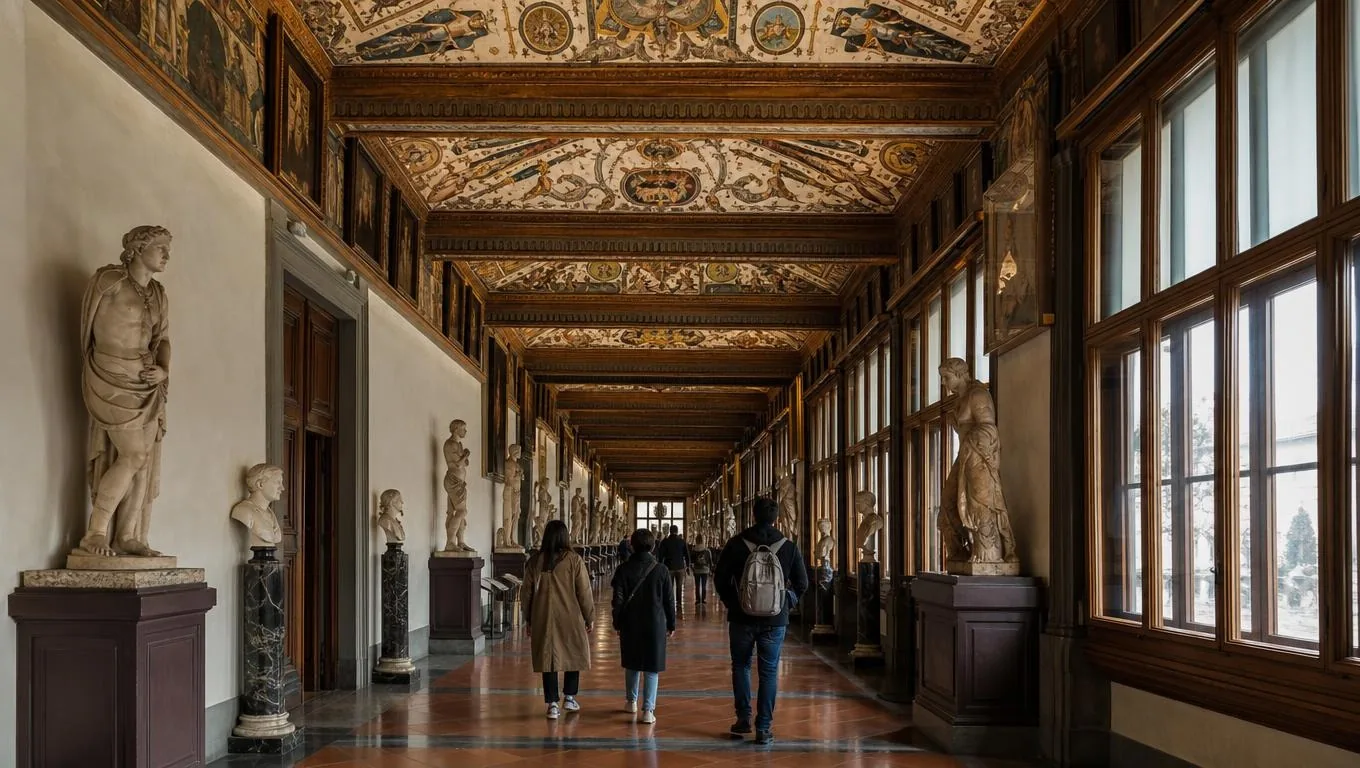
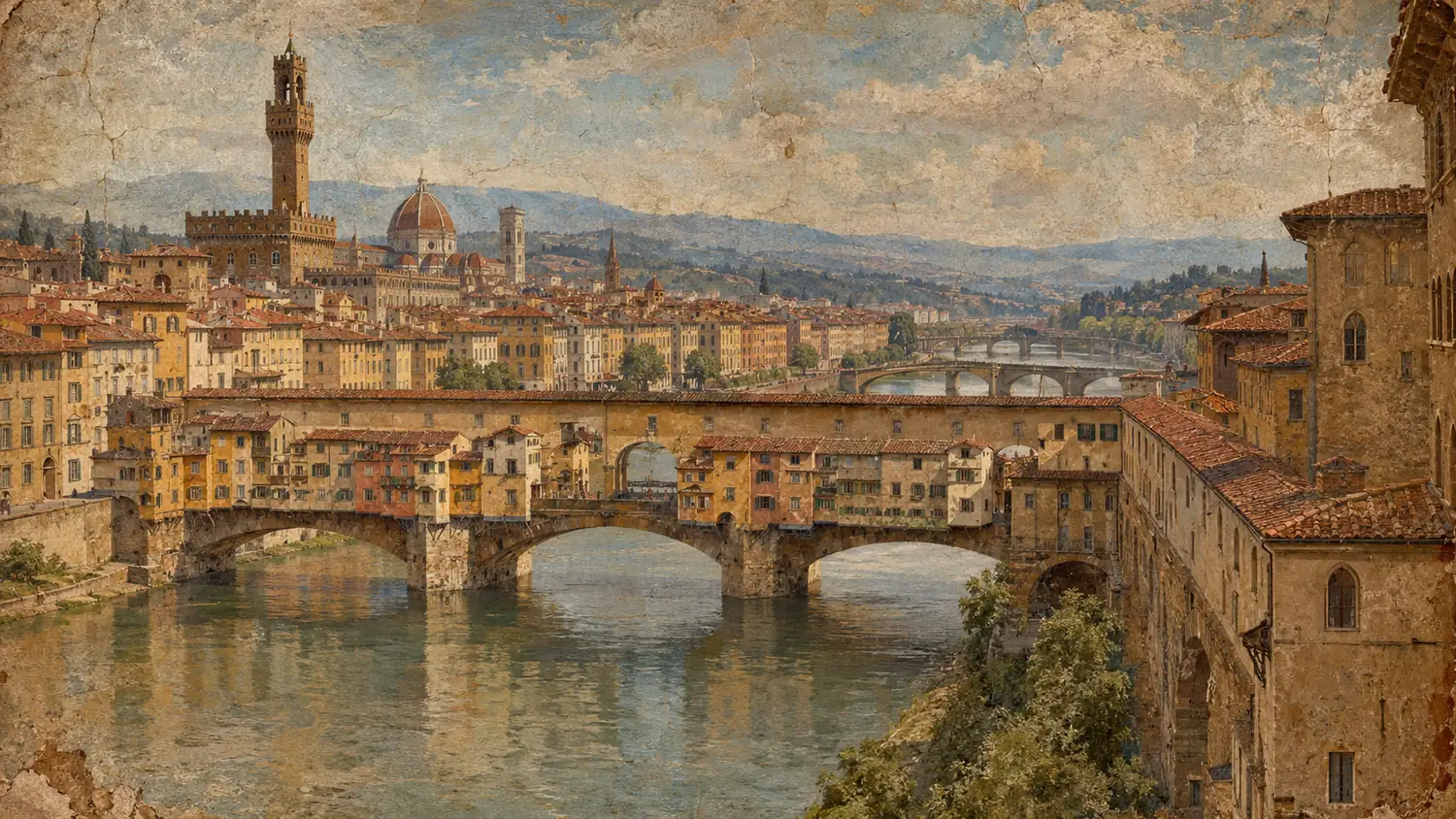
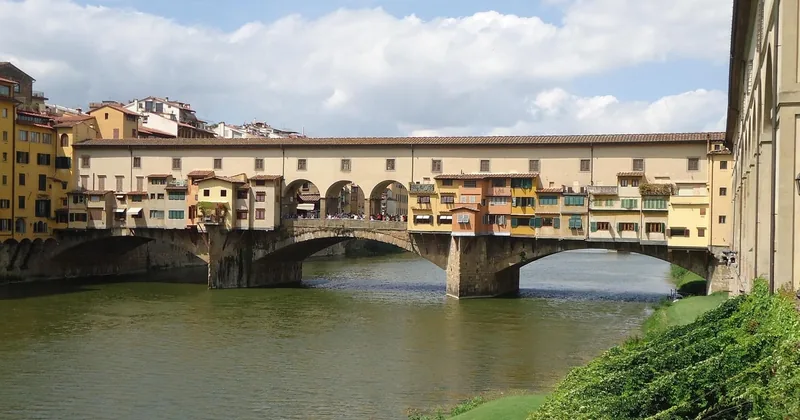
The Vasari Corridor was built in 1565 for Cosimo I de' Medici, to link the seat of government at Palazzo Vecchio with the ducal residence at Palazzo Pitti on the other side of the Arno. It runs through the Uffizi, along the river, over the Ponte Vecchio and across the Oltrarno rooftops.
Inside there is now little to read on the walls and no commentary, so the history is what you bring with you. Here is the story, and what to look for along the way.
The quick answer
Giorgio Vasari designed and built the corridor in about five months in 1565, for Cosimo I de' Medici and the wedding of his son Francesco to Joanna of Austria. It let the duke move between Palazzo Pitti and Palazzo Vecchio without going through the streets. It was damaged in the Second World War and by a Mafia car bomb in 1993, held the Uffizi self-portraits from the 1970s to 2016, then closed for safety work and reopened on 21 December 2024.
Why was the Vasari Corridor built?
So that Duke Cosimo I de' Medici could walk from his residence to the seat of government without going through the streets.
Florence had become a hereditary Medici duchy in the 1530s, and Cosimo governed cautiously. The trigger was a wedding: in 1565 his son Francesco married Joanna of Austria, and Cosimo had Giorgio Vasari build the passage in time, in about five months. (The Uffizi gives 1565; some sources date the commission to 1564.) Rome had a precedent, the raised Passetto di Borgo linking the Vatican to Castel Sant'Angelo.
What route does the Vasari Corridor take?
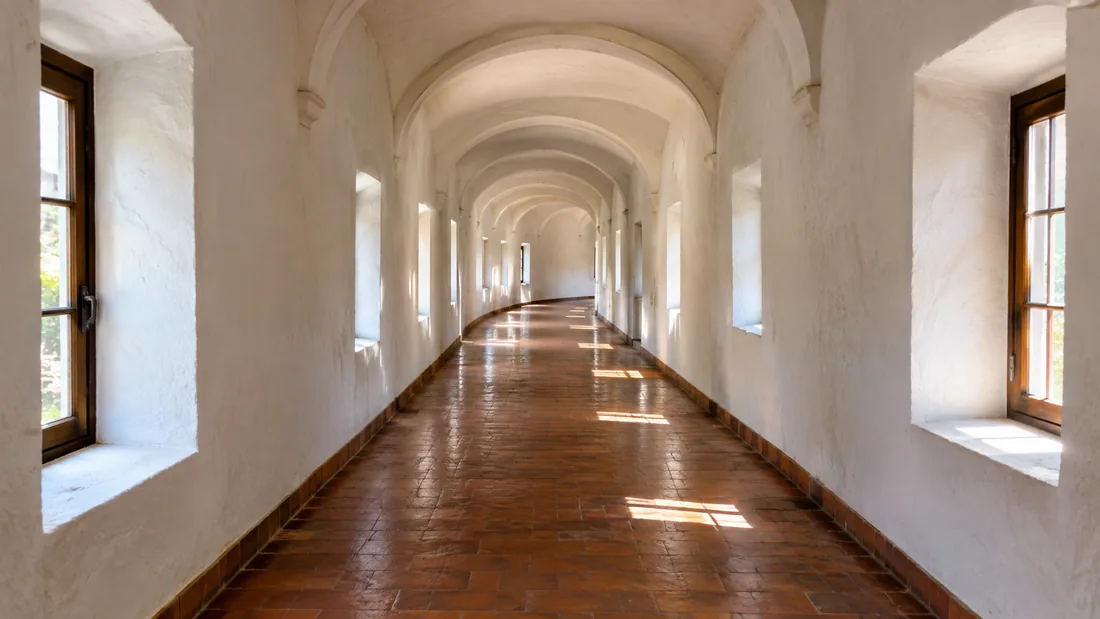
From Palazzo Vecchio through the Uffizi, along the Arno, over the Ponte Vecchio, round the Mannelli Tower, past Santa Felicita and on to the Boboli Gardens and Palazzo Pitti.
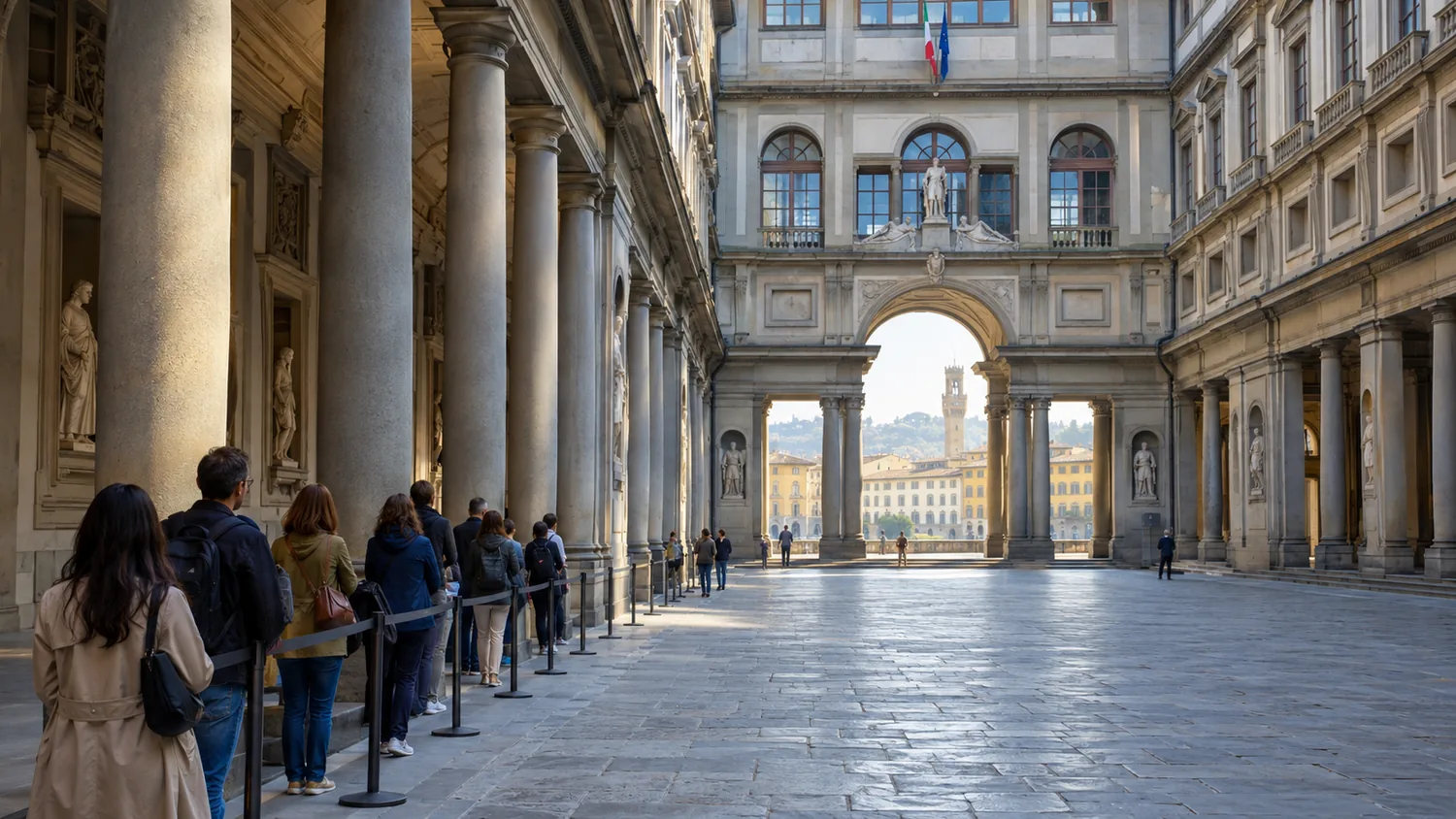
Today's visit starts inside the Uffizi rather than at Palazzo Vecchio, which is why the museum gives two lengths: about 760 metres from the Uffizi start to the Buontalenti Grotto, and about a kilometre for the whole walk you do, plus 100 metres from the grotto exit to the Pitti courtyard. It is one way only. How to fit it around the gallery is in planning the Uffizi and the corridor.
A private Uffizi tour, then the corridor, ending at Palazzo Pitti just as the dukes did.
Check dates for the private Uffizi and corridor tourWhy does the corridor bend around the Mannelli Tower?
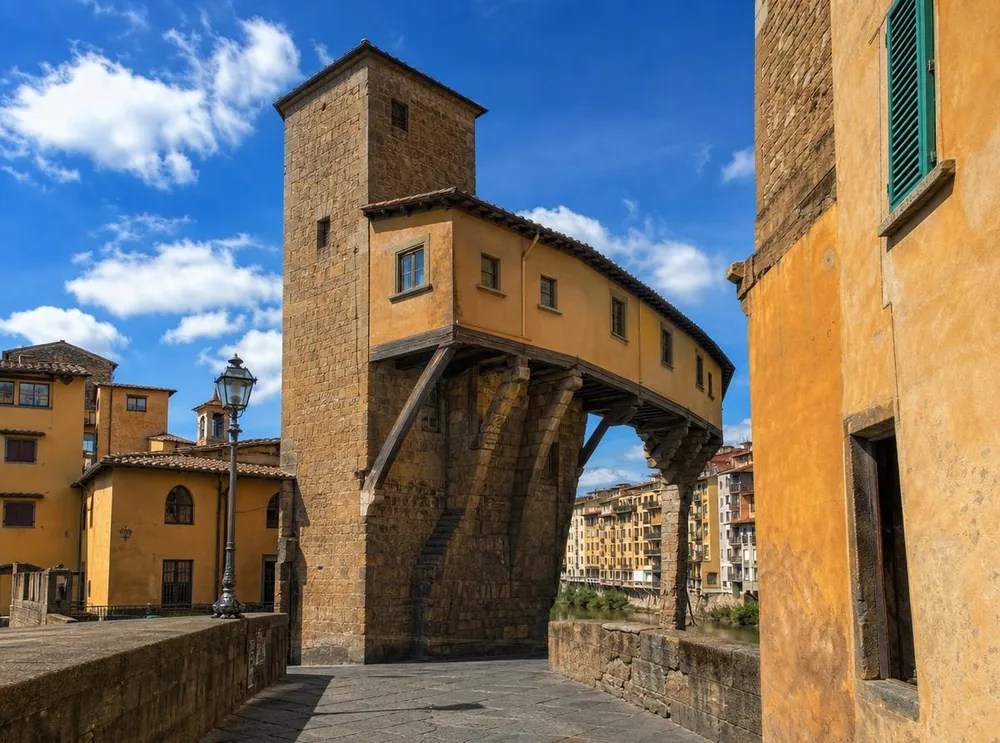
Because the Mannelli family refused to let their tower be demolished, so Vasari carried the corridor round it on stone brackets.
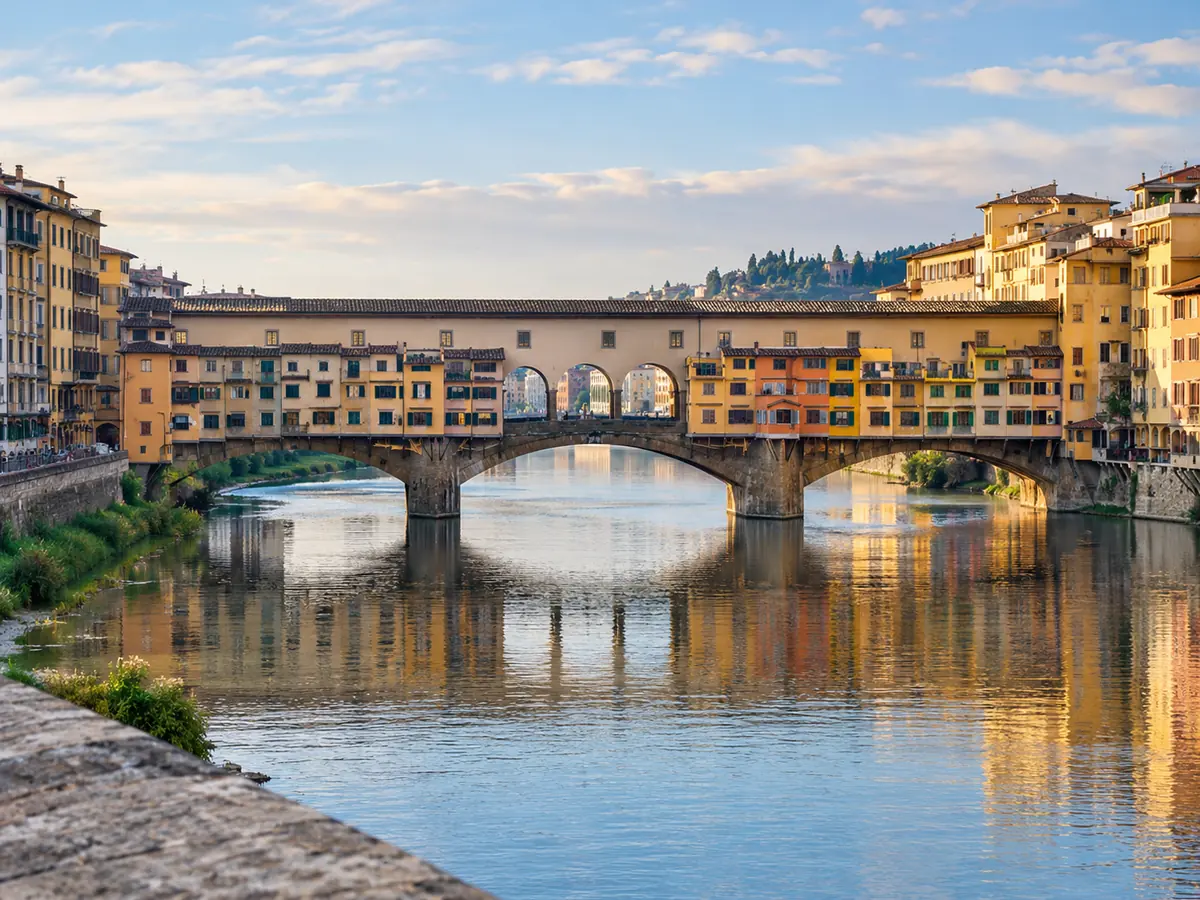
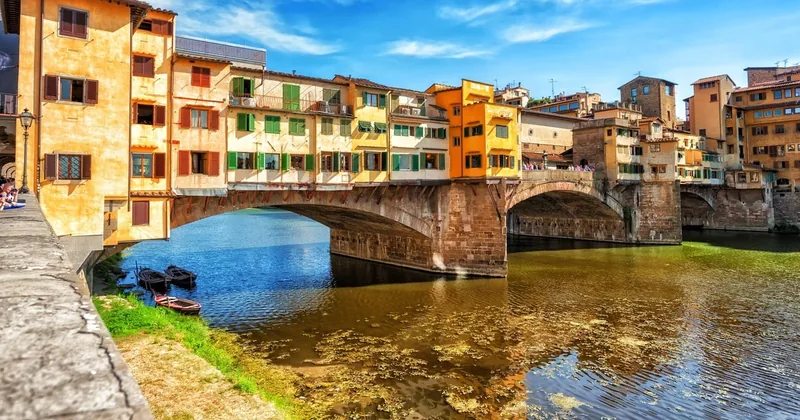
At the south end of the Ponte Vecchio, look out for the sudden change of direction. Outside, you can see the result from the street: the corridor hangs off the side of the medieval tower on heavy brackets, because one family refused the Medici.
Why are there goldsmiths on the Ponte Vecchio?
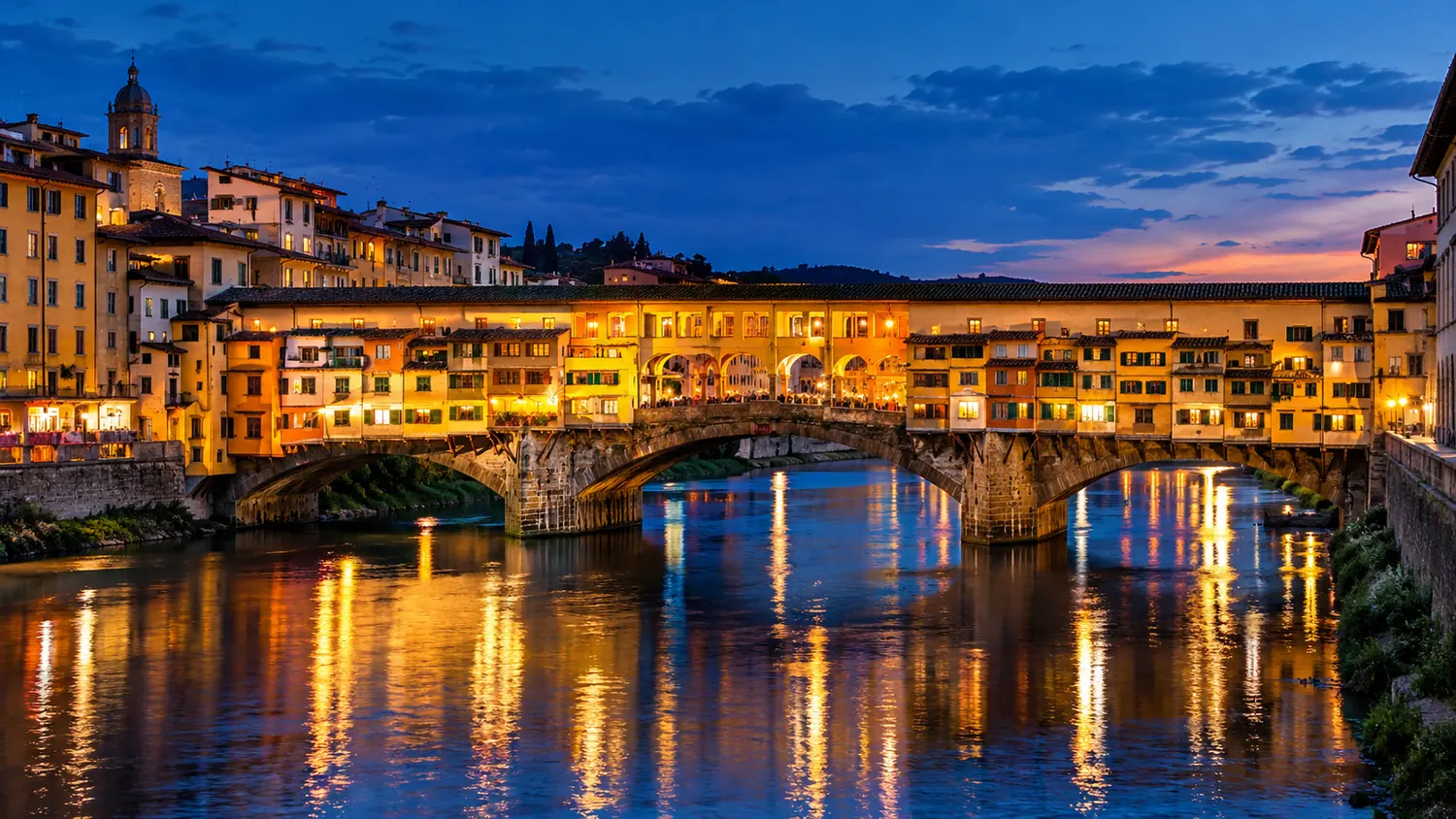
Because the butchers who worked there were moved out, the story goes because of the smell, and goldsmiths replaced them; they were established by 1593 and are still there.
The corridor runs along the east side of the bridge, above the shops. The bridge itself is a free public street; the corridor is the upper storey you need a ticket for. Walk across it before or after your visit and look up to see the line of windows you passed behind.
What is the balcony in Santa Felicita?
A private balcony looking into the church, from which the ducal family could hear Mass without being seen.
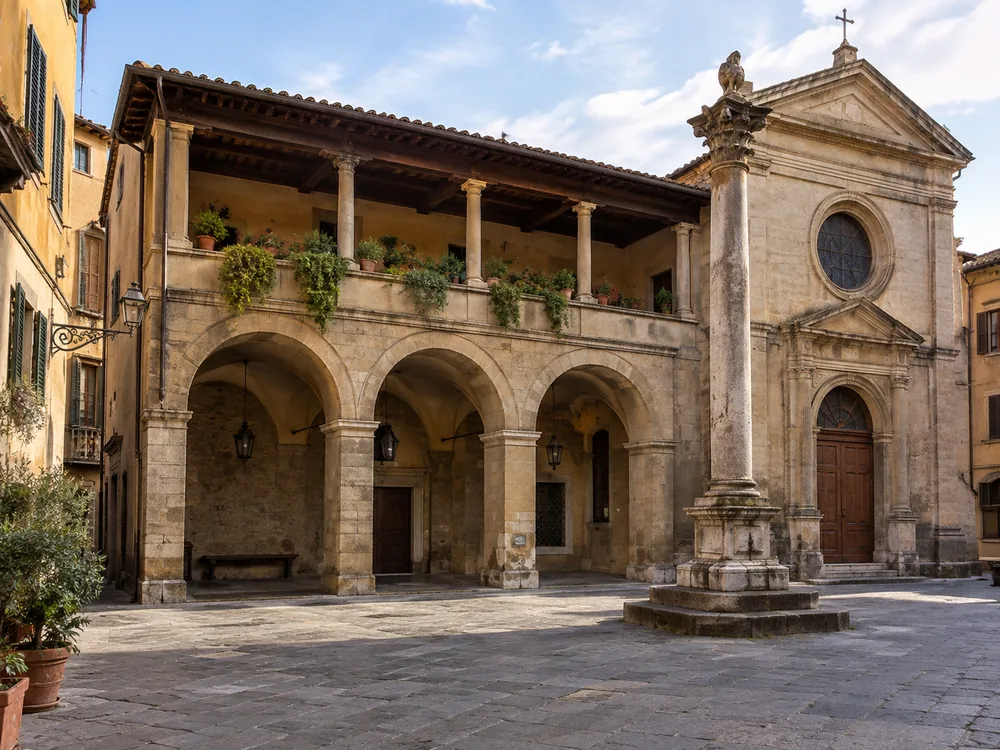
Across the river the corridor passes over the portico of Santa Felicita and opens onto the church interior. It is one of the moments that makes the route feel like what it was: a private road through other people's buildings, from palace to church to palace.
Did Hitler really have the windows over the Ponte Vecchio widened?
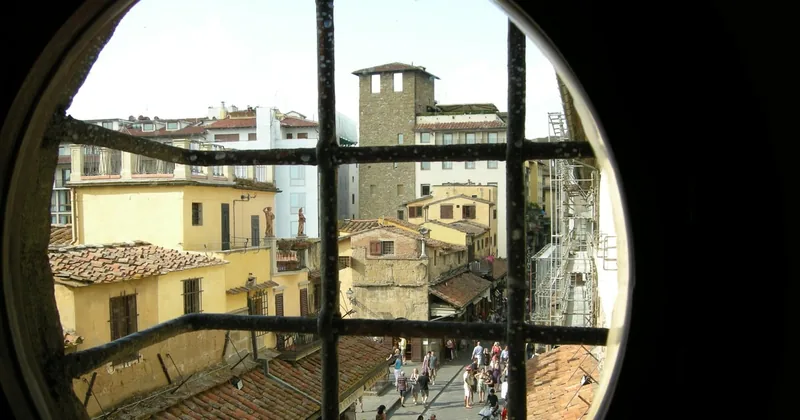
That is the widely reported story: the wide panoramic windows over the bridge are said to have been opened for Hitler's visit with Mussolini in May 1938.
Treat it as a story rather than an established fact. What you can see for yourself are the wide windows over the bridge, in the section where the Roman busts now stand; compare them with the smaller windows elsewhere on the walk.
Your own guide in the Uffizi, then the corridor and the grotto, in two and a half hours.
Explore the private Uffizi and corridor tourWhat happened to the corridor in the 20th century?
War damage, the 1966 flood, the self-portrait collection, a 1993 car bomb, and a 2016 closure for safety work.
| Year | What happened |
|---|---|
| 17th century | Cardinal Leopoldo de' Medici begins the self-portrait collection |
| 1943 | Damaged in the bombing of Florence |
| 1966 | Damaged in the Arno flood |
| 1970s to 2016 | The self-portraits hang in the corridor; public visits from 1974 |
| 27 May 1993 | A Mafia car bomb in Via dei Georgofili kills five people and damages the Uffizi end |
| 1998 | Reopens after repairs |
| 2016 | Closes to bring it up to safety standards |
| 2022 | Restoration works begin |
| August 2023 | Graffiti on seven pilasters |
| 21 December 2024 | Reopens to the public |
| July 2025 | More than fifty Roman busts installed above the Ponte Vecchio |
What changed when it reopened in 2024?
It was stripped back to its original bareness, made fully accessible and air conditioned, and later given a row of Roman busts.
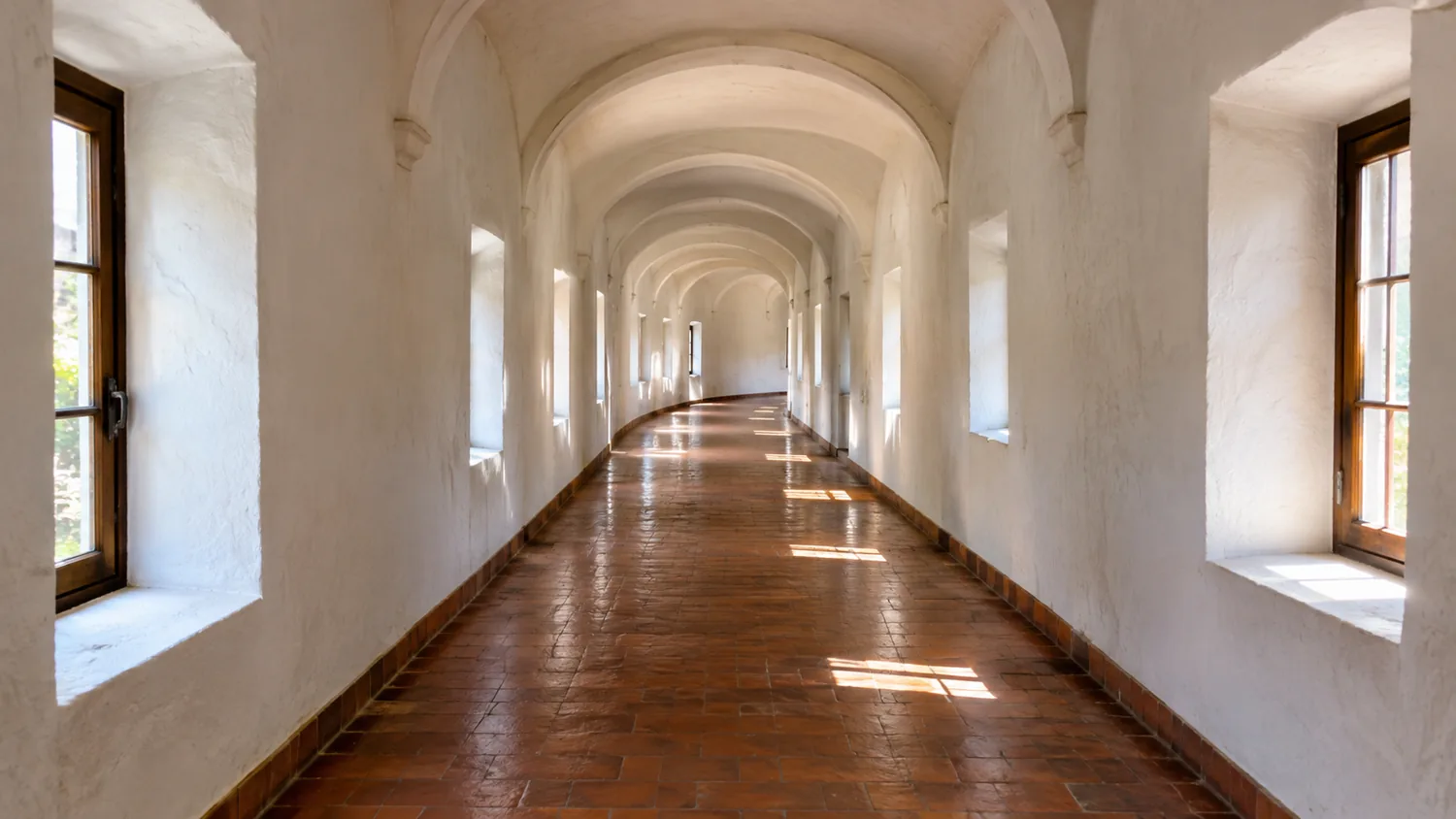
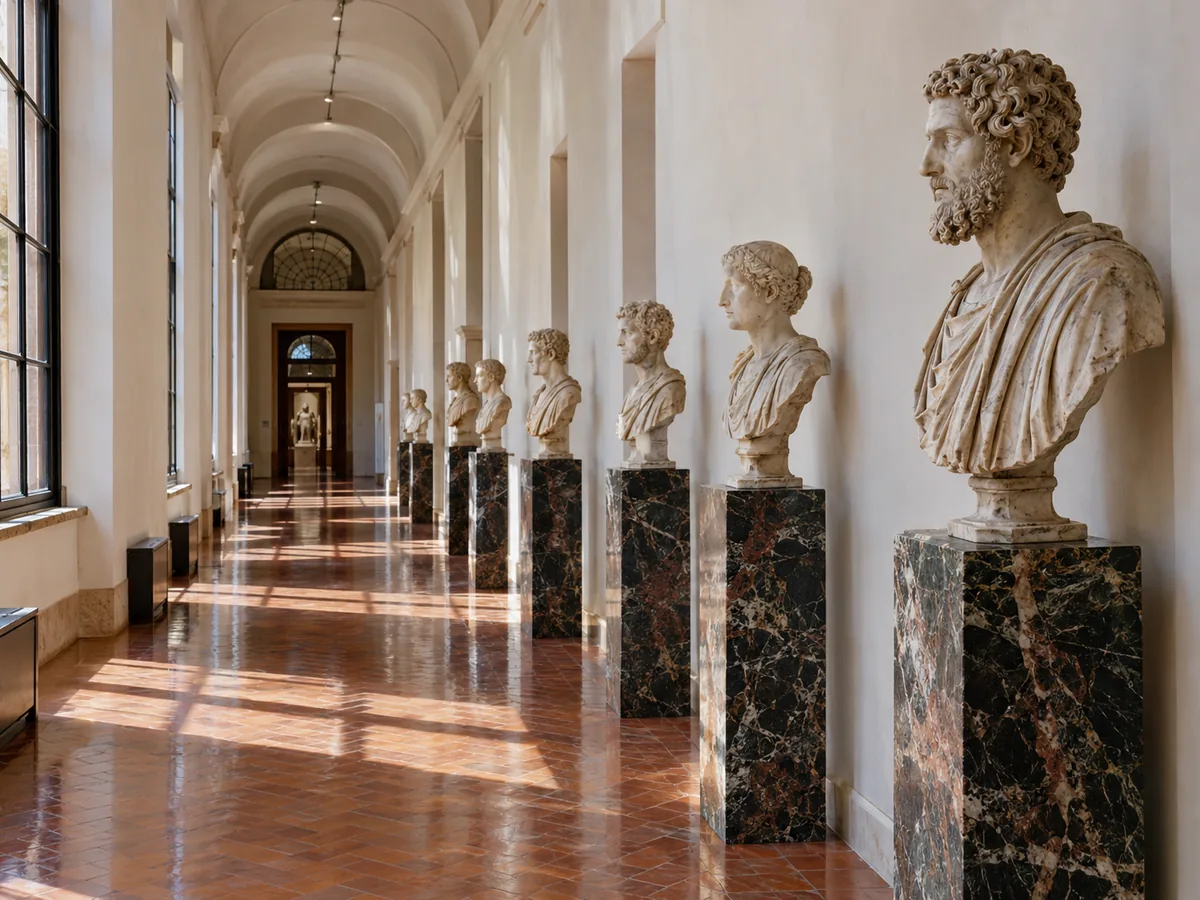
The restoration cost about 10 million euros, helped by a one-million-dollar gift in 2023 from US entrepreneur Skip Avansino. It added ramps, platforms and lifts, LED lighting, video monitoring, five new emergency exits and new air conditioning. The self-portraits did not return. Since July 2025, more than fifty Roman portrait busts, including Cicero, Augustus, Antoninus Pius, Faustina and Sabina, line the section above the Ponte Vecchio; they had been in storage since 1993. What it is like to walk today is in is the Vasari Corridor worth it.
Frequently asked questions
Who built the Vasari Corridor?
Giorgio Vasari, the architect and painter who also designed the Uffizi, for Duke Cosimo I de' Medici, in 1565.
How long did it take to build?
About five months, to be ready for the wedding of Francesco de' Medici and Joanna of Austria.
Why was the Vasari Corridor closed?
It closed in 2016 to bring it up to safety standards. Works began in 2022 and it reopened on 21 December 2024.
Are the self-portraits still in the corridor?
No. They hung there from the 1970s until 2016 and have not returned.
Ready to book
Choose your visit
Free cancellation up to 24 hours before on every option. Prices are from-prices in USD and move with the season.
Vasari Corridor & Uffizi Private Tour
Your own guide in the Uffizi, then the corridor
Uffizi Small Group (Max 9) + Vasari Option
- Licensed guide and reserved, timed Uffizi entry
- Headsets when the group needs them
- Vasari Corridor only with the Uffizi + Vasari option, about 3 hours in all
Uffizi + Vasari Corridor Reserved Ticket
- Uffizi entry two hours before your corridor slot
- Timed Vasari Corridor entry
- Voucher exchanged for the named tickets at a meeting point